
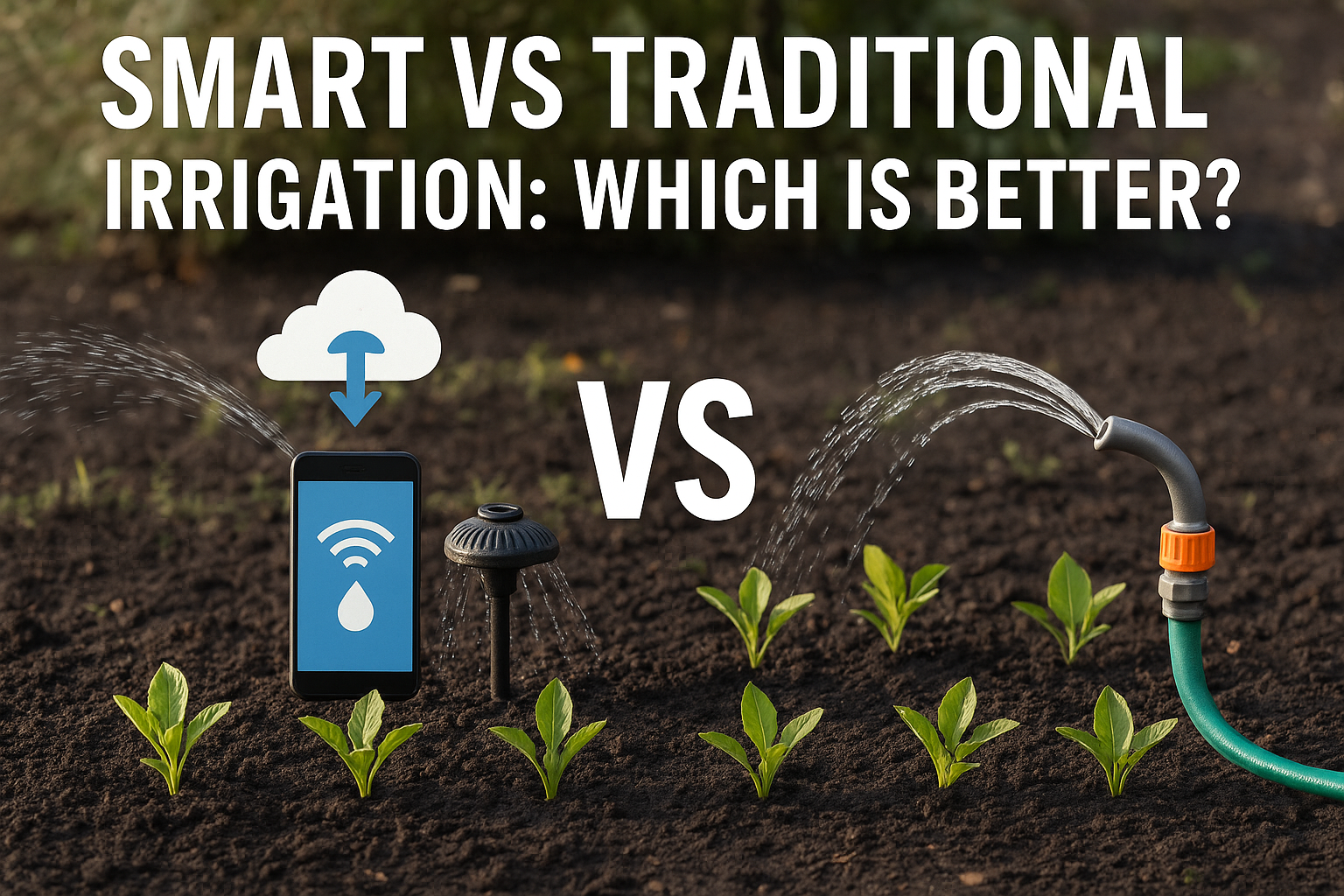
Smart vs Traditional Irrigation: Which Is Better?
Confused between smart and traditional irrigation systems? Discover the differences, benefits, and which one suits your NYC property best.
Understanding the Basics
Traditional irrigation systems use preset timers and manual controls, often leading to overwatering or inefficiency. In contrast, smart irrigation systems rely on sensors and weather data to automatically adjust watering schedules.
Smart vs Traditional: A Side-by-Side Comparison
| Feature | Smart Irrigation | Traditional Irrigation |
|---|---|---|
| Water Efficiency | High - adjusts based on weather and soil | Low - fixed timers can lead to waste |
| Automation | Fully automated, can be app-controlled | Manual or timer-based |
| Initial Cost | Higher | Lower |
| Long-Term Savings | Saves money on water bills | Higher water usage costs |
| Flexibility | Highly flexible, customizable schedules | Limited customization |
| Maintenance | Requires occasional software updates and professional maintenance | Basic mechanical maintenance |
What’s Best for Your NYC Property?
If your landscape is complex or you're managing rooftop gardens, a smart system offers precision and control. Traditional systems may still be suitable for smaller, simple areas.
Need Help Deciding?
Our experts at irrigation.nyc will assess your property and help you choose the right irrigation setup based on your budget, landscape, and goals.